Hands are among the most frequently exposed parts of the body in industrial workplaces. Workers may handle sharp materials, chemicals, hot components, electrical equipment, machinery, rough surfaces, oils, tools, and heavy materials every day. Choosing suitable industrial safety gloves is therefore an important part of workplace safety.
However, not all safety gloves provide the same protection. A glove designed for handling sharp metal may not be suitable for chemical handling, while ordinary work gloves should never be assumed to provide electrical protection.
At Vertex Industrial Solutions, we supply a wide range of industrial safety gloves and Personal Protective Equipment (PPE) to meet the requirements of manufacturing plants, construction companies, warehouses, engineering units, pharmaceutical facilities, food industries, and other workplaces.
What Are Industrial Safety Gloves?
Industrial safety gloves are a form of Personal Protective Equipment designed to protect workers’ hands against specific workplace hazards.
Depending on their design and materials, gloves may help protect against cuts, abrasions, punctures, chemicals, heat, cold, oils, grease, electrical hazards, and other risks.
Selecting gloves should always begin with a proper assessment of the work being performed and the hazards involved. No single glove is suitable for every industrial application.
Why Are Safety Gloves Important?
Hands are essential for almost every industrial activity, from operating equipment and handling materials to maintenance, assembly, welding, construction, and chemical processing.
Even relatively small hand injuries can affect an employee’s ability to work and may result in lost productivity.
Suitable safety gloves can help:
- Protect hands against workplace hazards
- Reduce the risk or severity of certain hand injuries
- Improve grip while handling appropriate materials
- Provide protection from selected chemicals, heat, cuts, or abrasion
- Improve worker confidence while performing tasks
- Support an organization’s overall workplace safety program
The level and type of protection depend entirely on the glove selected and the conditions in which it is used.
Different Types of Industrial Safety Gloves
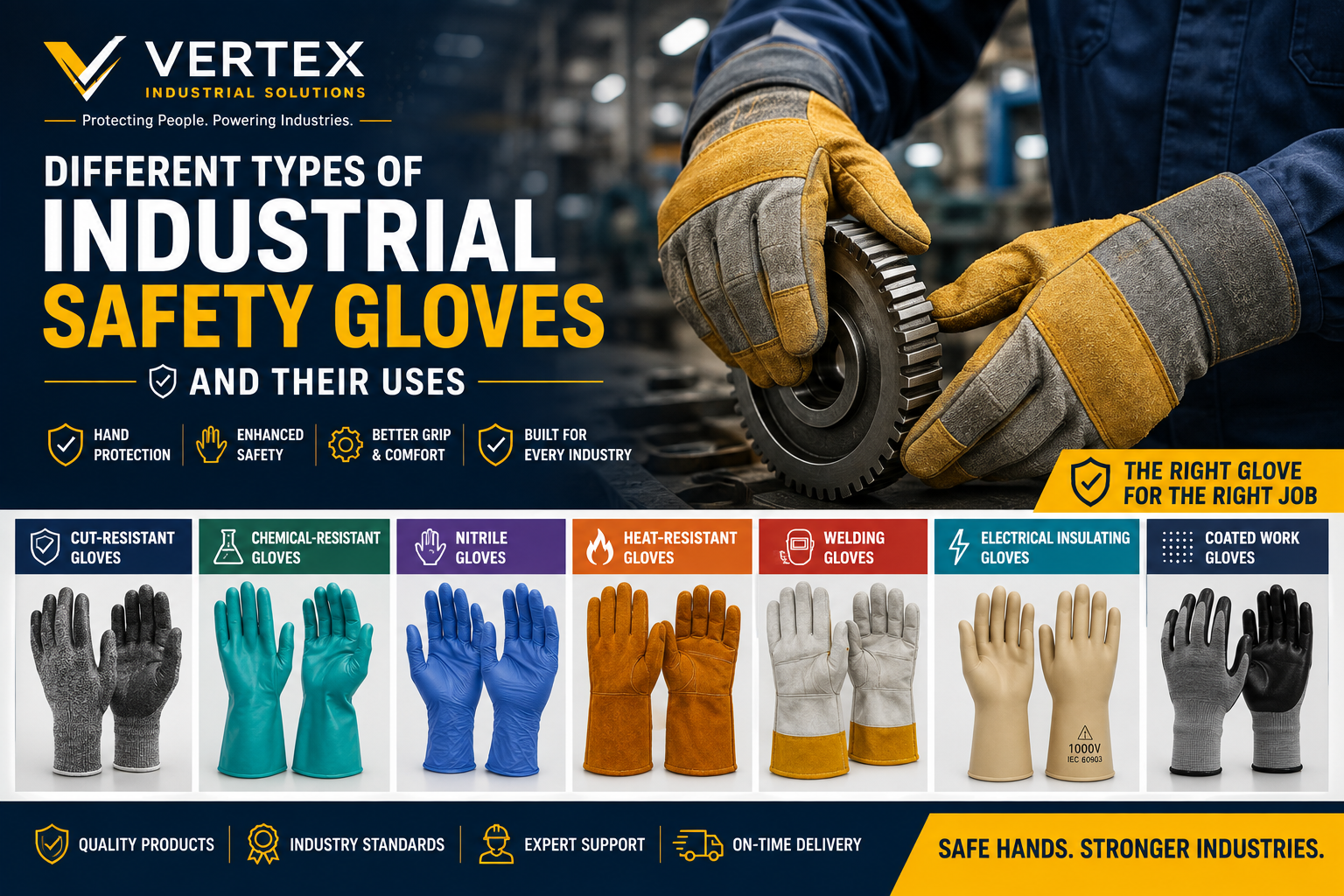
Understanding the main categories of industrial gloves makes it easier to choose appropriate protection for different tasks.
1. General-Purpose Work Gloves
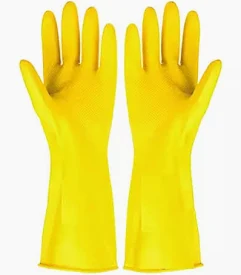
General-purpose gloves are commonly used for routine material handling and maintenance activities.
They may provide basic protection against dirt, minor abrasions, rough surfaces, and general wear during manual work.
Common applications include packaging, warehouse operations, light engineering work, general maintenance, construction support activities, and material handling.
These gloves should not be used where specialized chemical, electrical, cut, or heat protection is required unless specifically rated for that hazard.
2. Cut-Resistant Gloves
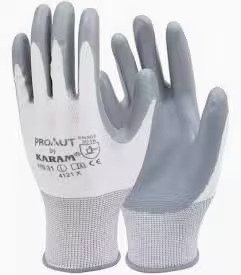
Workers handling sheet metal, glass, sharp components, blades, fabricated parts, or other materials with sharp edges may require cut-resistant gloves.
These gloves are manufactured using materials and constructions designed to provide varying levels of cut resistance.
They are commonly used in metal fabrication, automotive manufacturing, glass handling, engineering workshops, construction, assembly operations, and maintenance.
The required cut-resistance level should be selected according to the actual hazard rather than simply choosing the thickest glove available.
3. Chemical-Resistant Gloves
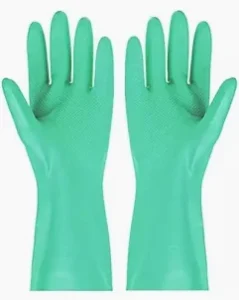
Chemical-resistant gloves are designed to protect the hands against specified chemicals.
Materials may include nitrile, neoprene, natural rubber, PVC, butyl rubber, and other specialized compounds. Importantly, no glove material provides universal protection against every chemical.
Chemical-resistant gloves are widely used in chemical processing, pharmaceutical manufacturing, industrial cleaning, laboratories, maintenance, painting, and certain food-processing applications.
Selection should be based on the exact chemical, concentration, exposure duration, temperature, and glove manufacturer’s compatibility information.
4. Nitrile Gloves
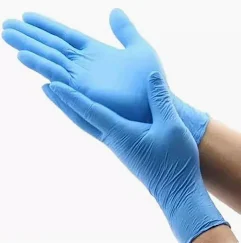
Nitrile gloves are widely used in industrial and professional environments.
Depending on their construction, they can offer useful resistance to oils, grease, certain chemicals, and contaminants while maintaining good dexterity.
Applications can include automotive maintenance, machinery servicing, industrial cleaning, laboratories, manufacturing, food handling, and pharmaceutical environments.
Disposable nitrile gloves and heavier reusable nitrile-coated work gloves serve different purposes, so they should not be treated as interchangeable.
5. Leather Safety Gloves
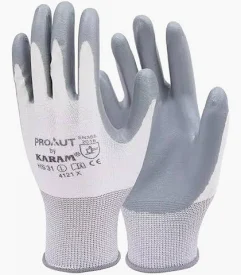
Leather gloves are popular for heavy-duty industrial work because of their durability and abrasion resistance.
They are commonly used for construction, material handling, fabrication, general engineering, maintenance, and some welding applications when specifically designed for the task.
Different types and grades of leather provide different performance characteristics.
For high-temperature or welding work, workers should use gloves specifically manufactured and rated for those applications rather than ordinary leather work gloves.
6. Welding Gloves
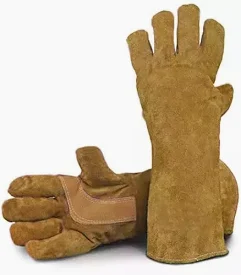
Welding operations can expose hands to heat, sparks, spatter, and hot materials.
Welding gloves are generally made from durable, heat-resistant materials and are designed to provide both protection and enough flexibility to perform welding tasks.
They are used in welding shops, steel fabrication, manufacturing, construction, maintenance, and engineering facilities.
The glove should be appropriate for the particular welding process and working conditions.
7. Heat-Resistant Gloves
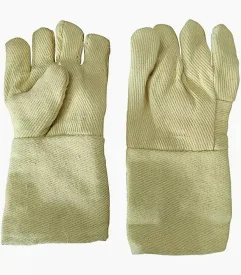
Workers handling hot components, heated tools, ovens, furnaces, or high-temperature materials may require specialized heat-resistant gloves.
These gloves can be manufactured from various heat-resistant materials and are available in different protection levels.
Typical applications include foundries, steel plants, glass industries, bakeries, industrial kitchens, welding operations, furnace maintenance, and manufacturing processes.
Temperature resistance varies significantly between products. Always verify the glove’s specifications before use.
8. Electrical Insulating Gloves
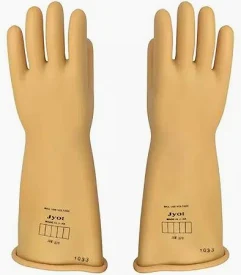
Electrical work requires specialized protection.
Electrical insulating gloves are designed for specific electrical hazards and must meet relevant safety requirements for their intended application.
They may be used by qualified personnel involved in electrical maintenance, power distribution, utilities, control systems, and certain engineering operations.
Ordinary rubber, nitrile, coated, or general-purpose gloves should never be assumed to provide electrical protection.
Electrical protective gloves require appropriate selection, inspection, testing, care, and use according to applicable procedures and standards.
9. Anti-Vibration Gloves
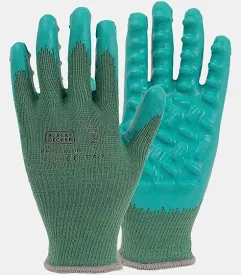
Workers operating certain vibrating equipment and tools may use gloves designed to reduce some vibration transmitted to the hands.
Applications may include work involving grinders, impact tools, pneumatic equipment, and other vibrating machinery.
However, gloves should not be considered a substitute for appropriate tool selection, equipment maintenance, exposure management, and other engineering or administrative controls.
10. Coated Work Gloves
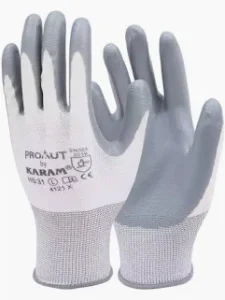
Coated gloves typically combine a fabric liner with a coating such as nitrile, polyurethane, latex, or PVC.
They can provide a useful balance between grip, dexterity, abrasion resistance, and comfort depending on the coating and design.
They are commonly used in warehouses, manufacturing, assembly, construction, logistics, maintenance, packaging, and material handling.
Different coatings offer different performance characteristics, so selection should reflect the work environment.
How to Choose the Right Industrial Safety Gloves
Choosing gloves simply because they are described as “industrial gloves” is not enough. The protection should match the specific task.
Before purchasing safety gloves, consider the primary hazard, materials being handled, chemicals involved, temperature, required dexterity, grip conditions, duration of use, cut or abrasion risk, electrical exposure where applicable, and relevant safety requirements.
Fit is equally important. Gloves that are too large may reduce control and dexterity, while gloves that are too tight may cause discomfort and discourage proper use.
Where gloves are used around machinery, the overall task and entanglement hazards should also be carefully assessed.
Inspection and Replacement of Safety Gloves
Even high-quality industrial gloves have a limited service life.
Workers should inspect reusable gloves before use for cuts, holes, cracks, excessive wear, chemical degradation, damaged coatings, contamination, or other signs of deterioration.
Disposable gloves should be replaced as appropriate for their intended use and should generally not be reused unless specifically designed and managed for reuse.
Specialized gloves, particularly electrical or chemical protective gloves, may have additional inspection, testing, storage, and replacement requirements.
Industrial Safety Gloves for Different Industries
Different industries face different hand hazards.
Manufacturing and engineering companies may require cut-resistant and coated gloves, while chemical and pharmaceutical facilities may need carefully selected chemical-resistant gloves. Construction workers may use durable general-purpose or task-specific gloves, while welding and fabrication facilities require appropriate heat and welding protection.
Vertex Industrial Solutions caters to industrial safety requirements across manufacturing, construction, steel and metal industries, cement plants, power plants, aqua feed industries, food and beverage facilities, pharmaceutical industries, warehouses, logistics operations, hospitals, educational institutions, and government organizations.
Industrial Safety Gloves from Vertex Industrial Solutions
Vertex Industrial Solutions provides industrial safety products and PPE for businesses with diverse operational requirements.
Our range includes industrial safety gloves along with safety helmets, safety shoes, safety goggles, face shields, hearing protection, respirators, reflective safety jackets, full-body safety harnesses, and other workplace safety products.
We focus on dependable products, competitive pricing, reliable sourcing, timely delivery, and responsive customer support.
Whether you need gloves for manufacturing, construction, material handling, maintenance, engineering, chemical handling, or other industrial applications, our goal is to help you identify suitable products for your requirements.
Conclusion
Industrial safety gloves play an important role in protecting workers’ hands, but effective protection begins with selecting the right glove for the right hazard.
Cut-resistant, chemical-resistant, nitrile, leather, welding, heat-resistant, electrical insulating, coated, and other specialized gloves all serve different purposes. Businesses should assess workplace hazards carefully and select gloves based on the actual application rather than relying on a one-glove-fits-all approach.
By combining suitable PPE with employee training, safe working procedures, equipment maintenance, and effective hazard controls, organizations can create safer and more productive workplaces.
Vertex Industrial Solutions — Protecting People. Powering Industries.



1 Comment
Eveniet voluptates qui sunt molestiae dicta libero. Eveniet eligendi consequatur sed et excepturi eligendi. Nisi dolores provident iste. Commodi omnis placeat ducimus totam. qui nihil nam quos. Perspiciatis nulla praesentium nobis Earum pariatur ab repellat in. Eveniet omnis repudiandae ut asperiores et. Quis officia alias ducimus. Enim totam quos Delectus tempora ratione nihil asperiores. Ut rerum aut. Nemo est eligendi odit unde qui sint. A incidunt maxime iure.